
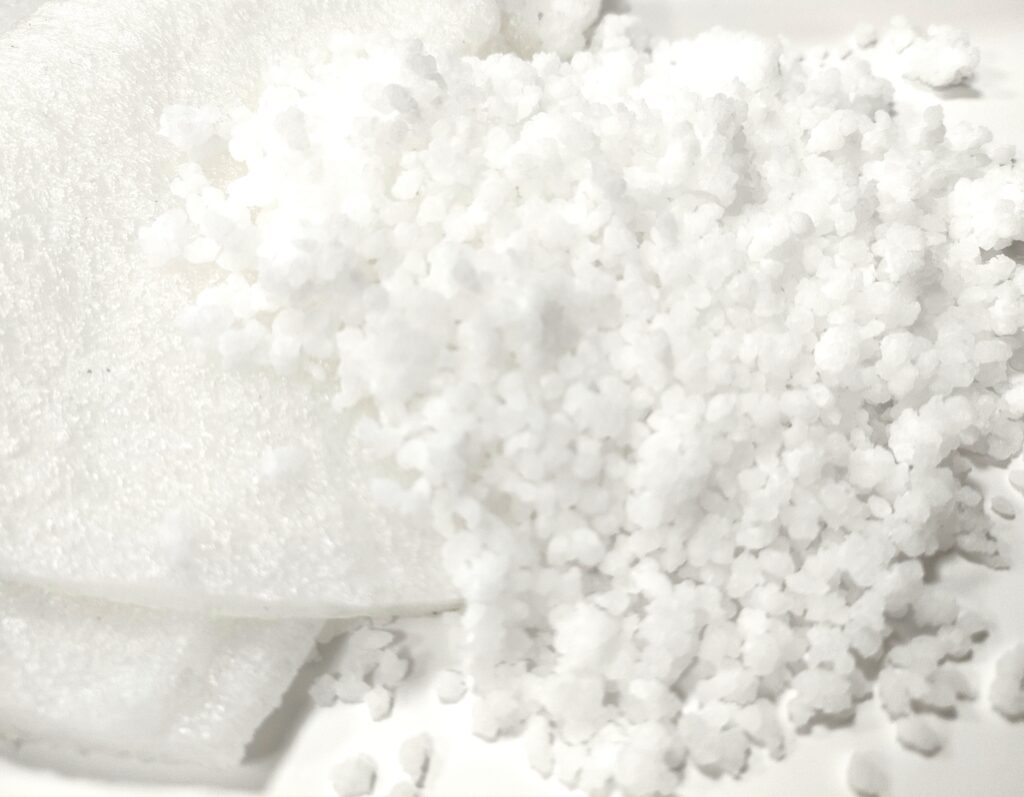
In the vast system of modern industry, there is one material that is everywhere — from car tires and medical gloves to seals and shoe soles, it quietly supports our daily lives. That material is synthetic rubber.
What Is Synthetic Rubber?
Synthetic rubber, also known as synthetic elastomer, is a highly elastic polymer synthesized by humans through chemical methods. Together with synthetic resin (plastics) and synthetic fibers, it is known as one of the three major synthetic materials. All three are polymers formed by the artificial polymerization of low-molecular compounds, with relative molecular weights typically above 1,000, making them typical high-molecular polymers. Among the three major synthetic materials, the production volume of synthetic rubber ranks second only to synthetic resin and synthetic fiber. However, its unique elasticity is irreplaceable by the other two. Today, synthetic materials are gradually replacing metals and have become indispensable materials in modern society.
Where Do the Raw Materials Come From?
The “source” of synthetic rubber is actually very close to us — petroleum. Its core raw materials are olefin compounds derived from petrochemical products, mainly obtained through petroleum cracking or pyrolysis processes. Key monomers commonly used include butadiene, styrene, acrylonitrile, isobutene, and chloroprene. Among these, butadiene serves as the basic monomer for most general-purpose synthetic rubbers; styrene imparts good abrasion resistance and processability; acrylonitrile delivers excellent oil resistance; isobutene is used to produce butyl rubber with exceptional gas impermeability; and chloroprene provides flame-retardant and aging-resistant properties for specialty applications.
How Is It Produced?
The manufacturing process of synthetic rubber can be summarized in two main stages: polymerization + post-treatment. First, olefin monomers are used as raw materials and undergo polymerization under the action of an initiator. Depending on product requirements, different polymerization routes can be adopted — emulsion polymerization, solution polymerization, suspension polymerization, or bulk polymerization. Emulsion polymerization is well-suited for large-scale continuous production such as styrene-butadiene rubber; solution polymerization yields high-purity products with strong process controllability; suspension polymerization offers good heat transfer and stable operation; and bulk polymerization features a shorter process flow without the need for solvent recovery. After polymerization is complete, the material must go through a series of post-treatment steps — including removal of unreacted monomers, coagulation, dewatering, drying, and packaging — before becoming finished rubber products.
Synthetic Rubber vs. Natural Rubber: What’s the Difference?
Many people ask: which is better, synthetic rubber or natural rubber? The answer is — each has its own strengths, and they complement each other.
Natural rubber (NR) is a natural polymer compound whose main component is cis-1,4-polyisoprene. Rubber hydrocarbons (cis-1,4-polyisoprene) account for 91% to 94% of its composition, with the remainder consisting of non-rubber substances such as proteins, fatty acids, ash, and sugars. It is the most widely used general-purpose rubber. At room temperature, it offers excellent elasticity and good electrical insulation, along with strong alkali resistance — but it does not hold up well against concentrated strong acids.
In comparison, although synthetic rubber’s overall properties are slightly inferior to those of natural rubber, its greatest advantage lies in customizability. Through molecular structure design, materials can be engineered with specific properties such as oil resistance, high-temperature resistance, aging resistance, and flame retardancy — characteristics that are difficult to achieve with natural rubber. Natural rubber excels with a “solid foundation” and well-rounded performance, while synthetic rubber wins on “design on demand” and its ability to handle special working conditions.
Application Prospects
With its high elasticity and diverse physical properties, synthetic rubber has penetrated nearly every corner of industry and daily life — including the automotive, aerospace, construction, medical and health, and consumer goods sectors. As materials science continues to advance, research into the modification and functional development of synthetic rubber is deepening, and more high-performance, eco-friendly new varieties are expected to emerge in the future.