
How to choose hydrocarbon Resins for Food Packaging Gravure Inks
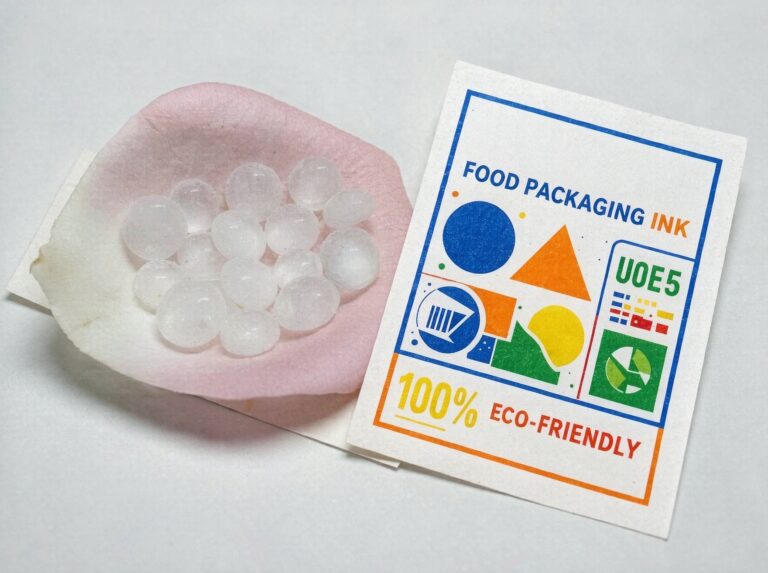
In the formulation design of gravure printing inks, particularly for the specialized field of food packaging, the choice of substrate directly dictates the selection of the petroleum resin. Currently, most food packaging gravure inks are applied to two primary substrates: BOPP film and PE film.
Due to the distinct physicochemical properties shared by these substrates, they impose stringent performance requirements on the compatible petroleum resins:
Three Key Characteristics of BOPP/PE Substrates:
Non-Polar Material: Extremely low surface energy acts like a “non-stick pan,” making adhesion difficult for conventional inks.
Smooth Surface: Lack of micro-porosity prevents mechanical anchoring of the ink.
Food-Grade Requirement: Involvement with food safety necessitates strict regulatory limits on odor, solvent residues, and toxicity.
Four Key Resin Selection Criteria Based on Substrate Properties:
Strong Adhesion (Specific Polarity):
Since polyolefins are non-polar, insufficient “bite” occurs if the resin’s polarity is mismatched. Therefore, hydrogenated C9 resins or C5/C9 copolymer hydrogenated resins are essential. The aromatic ring structure in the C9 component provides excellent wetting and adhesion, while the C5 component further enhances compatibility with the polyolefin substrate.
Low Odor (Food Safety):
BOPP and PE films are widely used in direct food contact packaging (e.g., confectionery, frozen foods). Conventional C9 thermal polymerization resins contain unreacted olefin fragments, resulting in high odor levels unsuitable for this application. The hydrogenation process saturates most double bonds, reducing odor to minimal levels and ensuring compliance with food contact material safety standards such as GB 9685.
High Color Stability (Light Color & Transparency):
Food packaging often employs light-colored designs or requires showcasing the true color of the contents (e.g., fresh meat, fruits, vegetables). Conventional C9 resins have a deep color (Gardner 7-10), which can contaminate ink hues. Hydrogenation treatment reduces the Gardner color value to ≤ 3, yielding a water-white appearance that ensures pure, clean print colors.
Appropriate Softening Point (Fast Drying):
Gravure printing is a high-speed process (line speeds up to 300 m/min), demanding excellent solvent release from the ink to prevent “blocking” (ink transfer between layers). Selecting a hydrogenated C9 resin with a softening point in the 100-120°C range provides sufficient bond strength while enabling rapid solvent evaporation, meeting the demands of high-speed production.
Summary:
For gravure inks intended for food packaging, formulation engineers should prioritize hydrogenated C9 resins or C5/C9 copolymer hydrogenated resins. This choice is driven not only by the need for robust adhesion to BOPP/PE substrates but also by the mandatory requirements for low odor, high transparency, and regulatory compliance inherent to food packaging applications.
| Product | Grade | Softening Point | Color Gardner (Ga#) | Acide Value (mg KOH/g) | Application |
| C9 Hydrogenated hydrocarbon Resin | KY-C9H100 | 98-103 | 0-1 | <0.1 | ink for food package |
| KY-C9H110 | 104-110 | 0-1 | |||
| KY-C9H120 | 110-120 | 0-1 | |||
| KY-C9H130 | 120-130 | 0-1 | |||
| C5&C9 hydrocarbon Petroleum Resin | KY-G100 | 95-105 | Max.6 | Max 2 |