
Hydrocarbon Resins for Ink
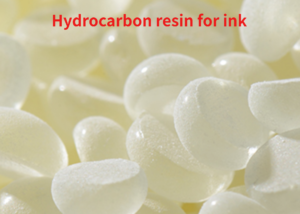
In modern ink manufacturing, the performance of petroleum resins directly determines the rheological behavior, adhesion, color expression, and final print quality of inks. To meet diverse printing processes and substrate requirements, here is a technical comparison of several core petroleum resin grades:
| Product | Grade | Softening Point | Color Gardner (Ga#) | Acide Value (mg KOH/g) | Application |
| C9 Thermal polymerization Resin | KY-C9R120 | 110-120 | 8#-11# | Max. 0.8 | ink |
| KY-C9R130 | 120-130 | 8#-11# | Max. 0.8 | ink | |
| C9 Catalyst hydrocarbon Resin | KY-C9L130 | 125-135 | 3-5# | Max. 0.8 | ink |
| KY-C9L140 | 135-145 | 3-5# | Max. 0.8 | ink | |
| C5&C9 hydrocarbon Petroleum Resin | KY-G100 | 95-105 | Max.6 | Max 2 | ink |
| C5 Hydrogenated hydrocarbon Resin | KY-C5H100 | 95-105 | 0-1# | Max 0.5 | ink |
| KY-C5H110 | 105-110 | 0-1# | ink | ||
| KY-C5H120 | 110-120 | 0-1# | ink | ||
| KY-C5H130 | 120-130 | 0-1# | ink |
Petroleum resins have evolved from simple tackifiers into multifunctional additives that fine-tune overall ink performance. From cost-effective C9 thermal polymerization resins to light-stable C9 hydrogenated resins, and further to eco-friendly C5 hydrogenated resins, precisely matching resin parameters—such as softening point, color stability, and acid value—is critical for formulation engineers aiming to achieve high-performance breakthroughs in ink systems.
To narrow down to specific product grades, please specify the ink type (gravure/flexographic/offset/water-based/UV), target substrate, and priorities regarding cost versus performance.